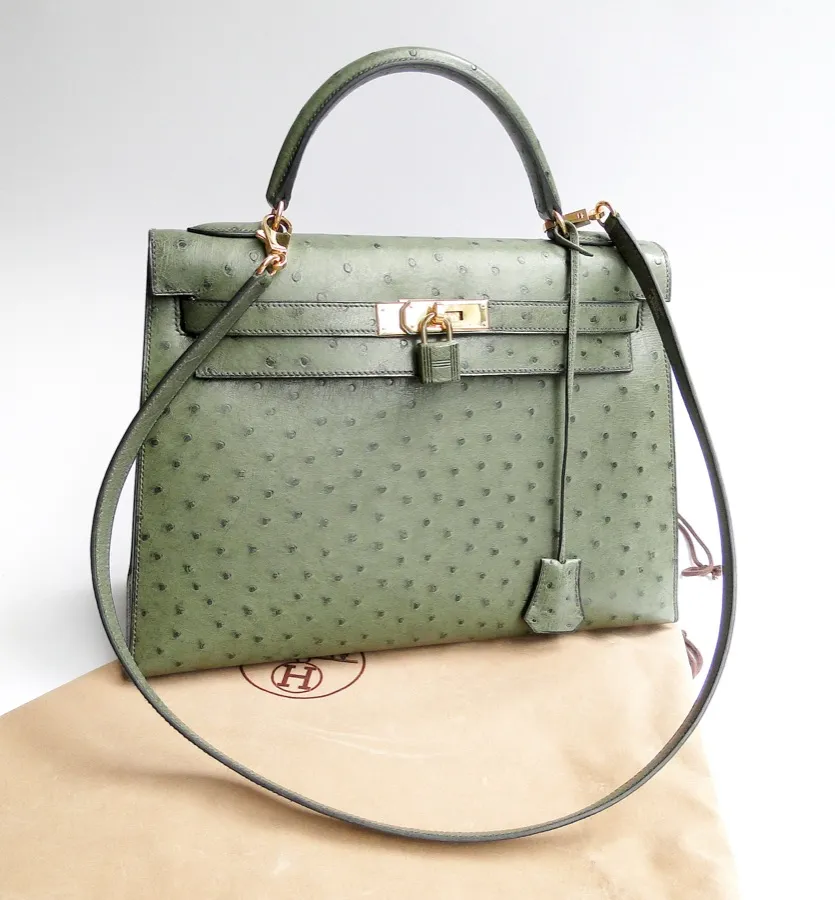
Quick answer
Look for hand saddle stitching that slants slightly and evenly, a crisp three-line Hermes Paris Made in France stamp whose colour usually matches the hardware, a subtle blind date stamp, crisp and weighty hardware, and keys numbered to match the lock. Hermes does not issue authenticity cards, so a bag sold with one is fake. No checklist replaces a professional with the bag in hand: ours takes about 15 minutes and costs you nothing.
The Nine Checks at a Glance
Use this table with the bag in front of you, in daylight; the sections below explain each check. Our other guides to selling a Hermes bag pick up once you know it is genuine.
| Check | Genuine | Red flag |
|---|---|---|
| 1. Stitching | Hand saddle stitch, slanting slightly and evenly, pulled tight | Flat, straight, machine-looking stitches or loose thread |
| 2. Heat stamp | Hermes Paris Made in France on three lines, centred, crisp, getting smaller line by line | Uneven spacing, blurred or misspelt letters, off-centre |
| 3. Date stamp | A subtle blind stamp with a year that fits the materials, plus an artisan mark | Pressed too deep, or a year that does not fit the leather or style |
| 4. Hardware | Crisp engraving, real weight, smooth zips, feet hammered in | Shallow or blurred engraving, light metal, flaking plating, feet that twist |
| 5. Lock and keys | The number on the keys matches the number on the lock | A different number, or keys with none |
| 6. Clochette | One piece of leather, substantial, lies flat with the keys inside | Thin, stiff or bulging, or pieced together |
| 7. Leather | The right grain, weight and smell for the stated leather, evenly coloured | A painted-on look, a chemical smell, a leather that did not exist that year |
| 8. Edges | Narrow, smooth, even edge colour with a hand-polished finish | Thick, rubbery, bubbled or cracked edge paint |
| 9. Construction | Balanced proportions, straight lines, a lining stitched in | Lopsided flap, wrong proportions for the size, glued lining |
Hermes bags are largely made by hand, so there are exceptions to every rule. One failed check means stop and ask a professional, not that the bag is certainly fake.
Checks 1 to 3: Stitching and Stamps
1. The Saddle Stitching
Hermes sews its bags with the saddle stitch that dates from its beginnings as a harness and saddle maker: two needles pass through each hole from opposite sides, pulling waxed linen thread tight. Christie's notes that a machine cannot reproduce it, that a correctly sewn saddle stitch will not unravel, and that the stitches should slant slightly upwards. Look along a straight seam, such as the sides of the flap or where the handles join: the stitches should be evenly spaced, evenly angled and pulled tight, with no loose ends. Machine stitching lies flat and runs dead straight. Counterfeiters now imitate the slant, so good stitching is necessary but not enough.
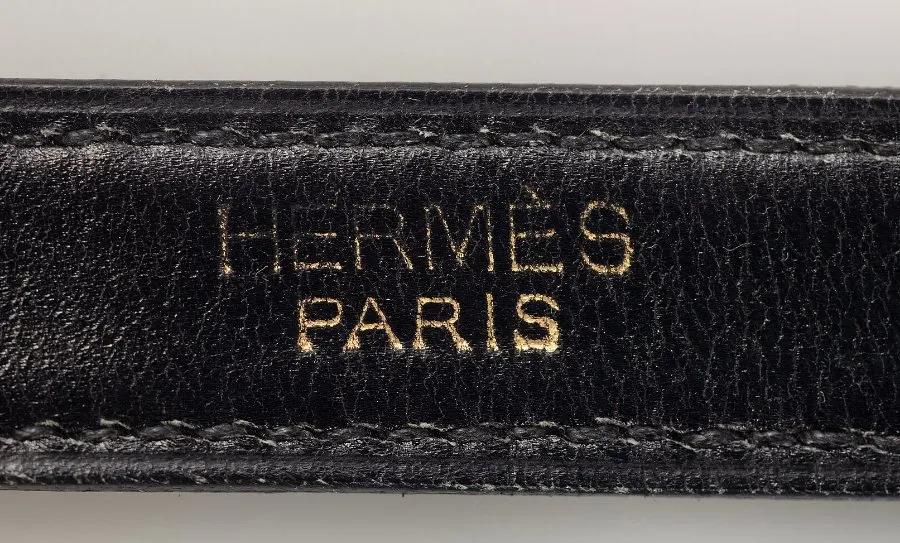
2. The Heat Stamp
On bags made after 1965, Christie's describes the logo stamp as Hermes Paris Made in France pressed into the leather over three lines, with lettering that gets smaller on each line, centred and evenly spaced. On a Birkin it sits under the flap, above the turnlock; on other models the position varies. The foil colour usually matches the hardware, gold with gold and silver with palladium. Check the accent on the E, the spacing between letters and the edges of each letter: they should be clean, not blurred or filled in. On exotic skins a small extra symbol near the stamp identifies the skin; Christie's gives the caret (^) as the mark for porosus crocodile.
3. The Blind Date Stamp and Artisan Mark
The date stamp is a letter pressed without ink or foil, sometimes inside a shape, that gives the year the bag was made. Beside it you will usually find a mark identifying the craftsperson who made the bag. Christie's says the blind stamp is meant to be very subtle and that counterfeiters often press it too hard, so a deep, sharp stamp is a warning. The year also has to fit the bag: Evercolor leather was only introduced in 2013, for example, so it should never carry an earlier stamp. Not every genuine Hermes piece has a blind stamp, and a correct letter proves nothing on its own, because fakers copy them. Our Hermes date stamp checker gives the year for every letter since 1945, and shows where to look on older and newer bags.
Checks 4 to 6: Hardware, Lock and Clochette
4. Hardware Engraving and Weight
Hermes hardware is brass plated with metals such as palladium and gold. According to Christie's, every engraving should be crisp and precise, never shallow or blurred, and the plating should not peel or flake. Pick the bag up: the turnlock, plaques and straps should feel solid and heavy for their size. The zips should run smoothly and feel weighty, the turnlock should be easy to turn, and the metal feet on the base should be hammered in, not glued. If a foot twists or unscrews, investigate further. Fine scratches are normal on a carried bag; flaking plating on a bag that looks new is not.
5. The Lock and Keys
Bags that come with a padlock, such as the Birkin and Kelly, come with keys to match. The number stamped on the keys should match the number engraved on the lock, and each key should turn it smoothly. Keys do get lost over the years, so a missing key is not proof of a fake, but a key carrying a different number needs a good explanation.
6. The Clochette
The clochette is the small leather bell that holds the keys and hangs from the handle. Christie's says it should feel substantial, be made from one piece of leather and stay quite flat even with the keys inside. Its leather and colour should match the bag. A thin, stiff or bulging clochette, or one pieced together from several parts, is a reason to look harder at everything else.
Checks 7 to 9: Leather, Edges and Construction
7. Leather Grain and Smell
Each Hermes leather has its own texture, weight and scent. Togo has a soft, pebbled natural grain; Epsom has a fine, pressed grain and is light and rigid; Clemence has a larger, flatter grain and slumps more; Swift is smooth and fine. A genuine bag smells of leather, not of glue or chemicals. The colour should be even and look dyed into the leather, never painted on, and Christie's notes that the colour should be one that appears in the Hermes colour chart. Inside, Christie's says genuine bags are usually lined in supple leather, typically chevre goatskin, in a colour that matches the outside. Our guide to Hermes leather types shows how to tell the leathers apart.
8. Edges and Glazing
Where the leather is cut, the raw edge is sanded, dyed and polished by hand in several passes. On a genuine bag the result is a narrow, smooth, even edge, usually matched to the leather, with no drips, bubbles or cracks. Thick, rubbery, shiny edge paint that sits on top of the leather like plastic is common on fakes. Edges do wear on a carried bag, above all at the handles and corners, and honest wear looks different from poor finishing.
9. Construction and Proportions
Hermes bags are known for balanced proportions. On a Birkin, the flap should sit flat and centred, the handles should stand evenly and the straps should line up with the turnlock. Measure the base and compare it with the published size: our Birkin sizes guide has the dimensions. The lining should be sewn in, not glued to the sides. A genuine bag tends to hold its shape, but Christie's is clear that it has seen authentic bags with crumples, creases and collapsed handles, so a tired shape alone is not a red flag.
The Paperwork: Supporting Evidence, Not Proof
The original receipt is the most useful document a bag can have: it records the date, the store and, usually, what was bought. Check that it describes this bag, in this size, leather and colour. The box should be sturdy, in Hermes orange with dark brown edging and the Bolduc ribbon, and Christie's notes that rows of hidden logos appear on a genuine lid under UV light. Current dust bags are beige herringbone fabric; older ones were orange cotton flannel and, before that, light brown velveteen. Exotic skins should come with a permit for the skin.
None of it proves the bag. Genuine boxes, dust bags and receipts can be separated from their bags and paired with a fake. Paperwork supports a genuine bag; it cannot rescue a doubtful one.
Why No Checklist Is Enough
The counterfeits known as superfakes are built to pass the nine checks above, often with good leather, hand stitching and accurate stamps. In photos, and to anyone who has not handled hundreds of genuine bags, they can pass. Christie's own specialist advises that because Hermes bags are made by hand there are exceptions to every rule, and that you should seek a trusted expert if in doubt; she also mentions testing the metal of the hardware as one way to separate real from fake.
So use the checks to rule a bag out, never to rule it in. If you are buying, buy only from a seller who guarantees authenticity in writing. If you are selling an inherited bag you are unsure of, have it authenticated before you put a price on it.
Tip
Check in daylight, not under warm indoor bulbs, and hold a torch low across the leather to see a blind stamp.
How We Authenticate a Bag We Buy
We price from photos, but we authenticate in person with the bag in hand. It takes about 15 minutes and costs you nothing. We go through every check on this page against the receipt, box and keys. If the bag does not hold up, we stop, tell you plainly why, and make no offer; the bag stays yours. If it does, the money goes by Faster Payments within 2 hours of authentication on a UK banking day. We buy bags made from 2012 onwards, as complete sets only.
The how it works page covers the visit and the ID checks. Our guide on how to sell a Hermes bag takes you from here to payment, and the comparison of the best places to sell a Hermes bag covers auction and consignment if yours is outside what we buy.
Sources: Christie's, How we know your Hermes handbag is the real deal; Sotheby's, Sell Hermes bags like an expert; Christie's Handbags and Accessories.