Quick answer
Togo, Epsom and Clemence are the everyday Hermes leathers and price within a few per cent of each other. Chevre (+12%) and Barenia (+15%) pay more, Toile pays less (-15%), and exotics are a separate market: ostrich +35%, lizard +80%, crocodile or alligator +120%. On a Birkin 30 that is the difference between about £10,600 to £12,700 and about £23,300 to £28,000.
Every Hermes Leather at a Glance
The effect column is what each leather does to the price we pay, against Togo, with size, colour, hardware and condition held the same. It comes straight from the model behind our Hermes price guide.
| Leather | How to recognise it | How it wears | Effect on price |
|---|---|---|---|
| Togo | Raised, pebbled grain with fine veins; matte | Softens over time but keeps its shape; resists scratches | Baseline |
| Epsom | Fine, even, pressed cross-hatch grain; light and stiff | Holds its shape and wipes clean; corners show wear first | +5% |
| Clemence | Larger, flatter grain than Togo; heavier and softer | Slouches with use; marks if left wet | -3% |
| Swift | Smooth, fine grain with a soft sheen | Takes colour vividly; scratches easily | No change |
| Box calf | Smooth, glazed, almost mirror-like shine; firm | Scratches and water spots show, but polish back | +5% |
| Chevre | Goat: fine, pronounced grain with a light sheen | Light, tough and scratch resistant; keeps its colour | +12% |
| Barenia | Smooth saddle leather with a waxy, natural feel | Darkens into a patina; records marks and water | +15% |
| Evercolor | Small, regular printed grain; soft and satiny | Supple and light; relaxes with use | -2% |
| Toile / canvas | Woven canvas, usually trimmed in leather | Light but stains; harder to clean than leather | -15% |
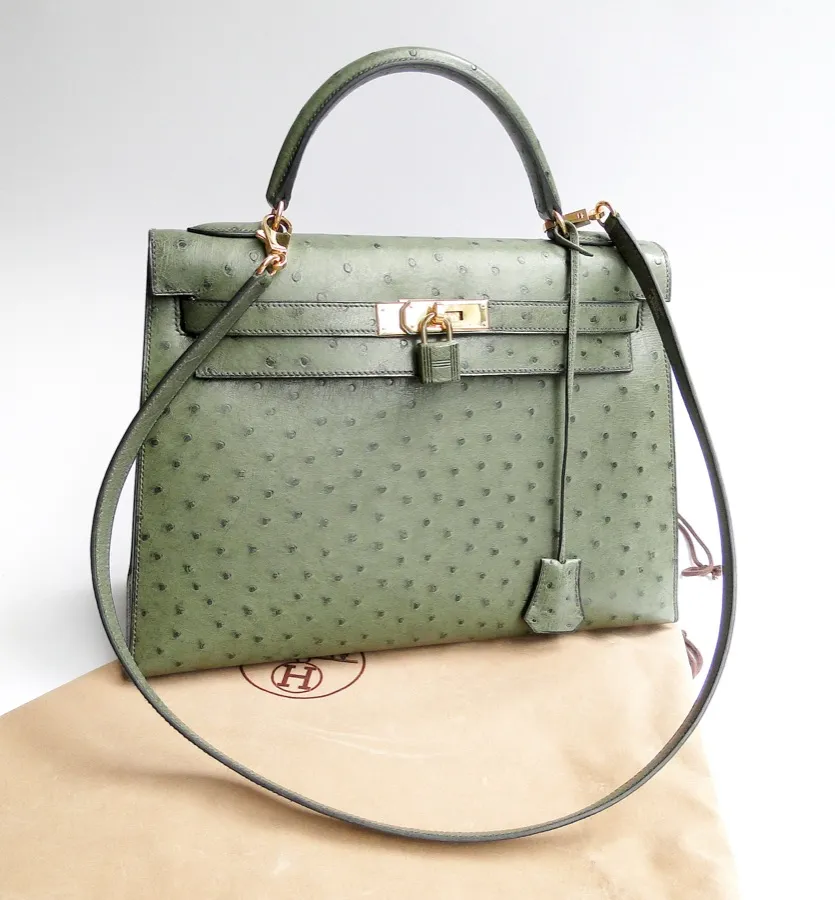
| Ostrich | Raised dots where the quills grew | One of the most durable exotics; darkens where handled | +35% |
| Lizard | Tiny, fine, glossy scales | Sensitive to moisture and sunlight; used on small bags | +80% |
| Croc / alligator | Square or rectangular scales, shiny or matte | Needs dry storage; scale edges can lift if neglected | +120% |
Effect is against Togo, for a complete set from 2012 onwards. Crocodile and alligator share one figure in our model.
Grained Calf: Togo, Epsom and Clemence
These three are among the most common leathers on the Birkin and the Kelly. They look alike at a glance, and telling them apart is mostly a matter of grain, weight and stiffness.
Togo
Togo is calfskin with a soft, raised, pebbled grain, often with fine veins running through it. It is matte, fairly light, and resists scratches and light rain better than most. Sotheby's dates it to 1997. A Togo bag softens with use and relaxes slightly, but it keeps its shape. It is the benchmark leather and the baseline in our model.
Epsom
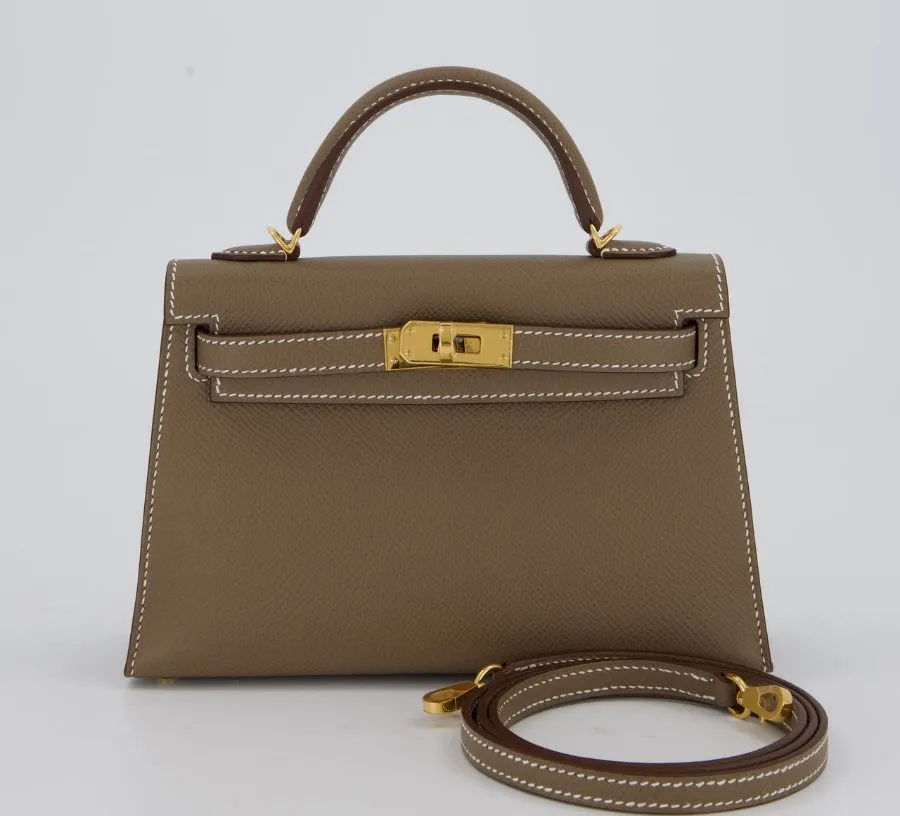
Epsom is calf with a grain pressed into it by heat, so the pattern is fine, even and regular, like a close cross-hatch. It is light and stiff, and it holds a sharp, structured shape, which is why it suits Sellier bags. It replaced an earlier embossed leather called Courchevel in the early 2000s. Epsom wipes clean and resists dents, but its edges and corners show wear first. Our model puts it at +5%.
Clemence
Clemence (Taurillon Clemence) comes from young bulls. The grain is larger and flatter than Togo's, the leather is heavier and softer, and a Clemence bag slouches more with use, which some owners love. It develops a soft, velvety patina, but it marks if it gets wet and is not dried promptly. Our model puts it at -3%.
Smooth Leathers: Swift, Box Calf and Barenia
Smooth leathers show colour at its most intense, and show wear at its most obvious. They reward careful owners.
Swift
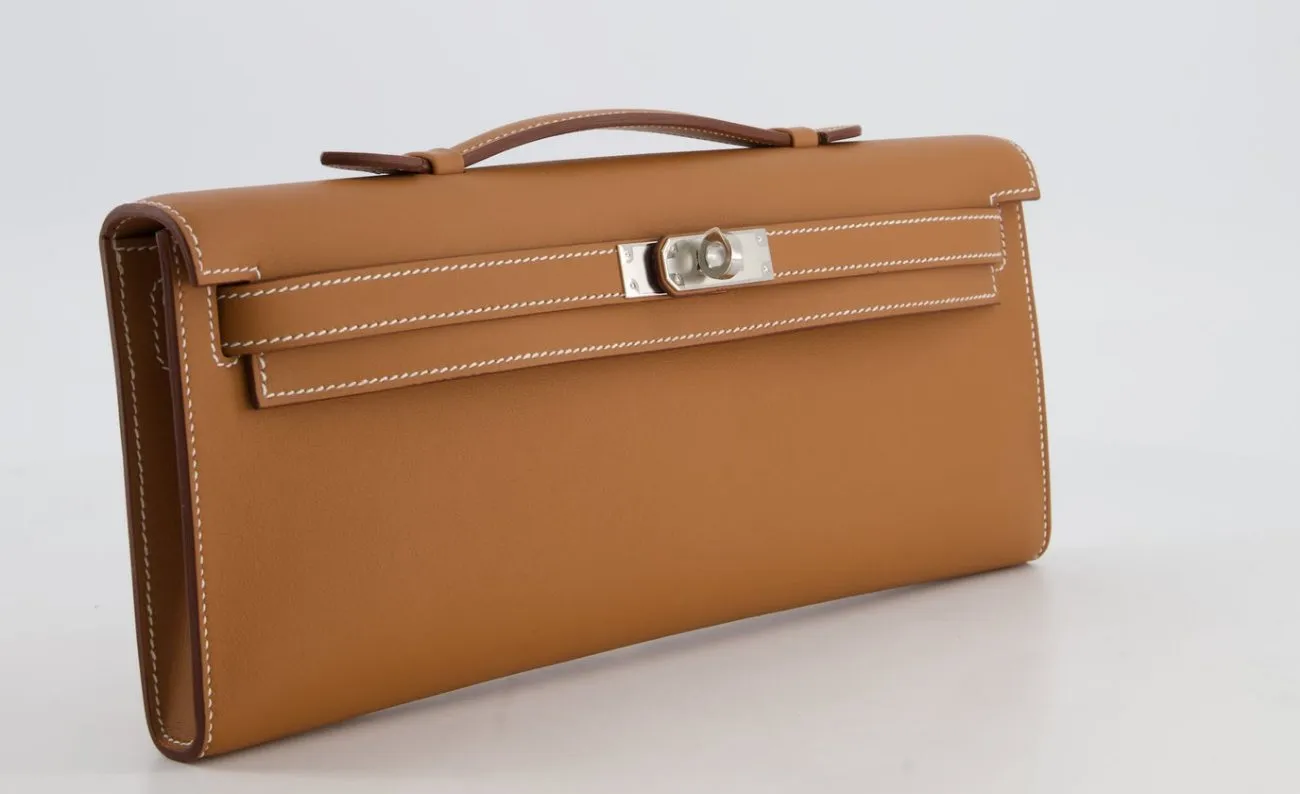
Swift is a smooth calf with a very fine grain and an almost silky hand. Sotheby's dates it to 2005. It absorbs dye deeply, so colours look rich and luminous, but it scratches easily and holds less structure than Epsom. It is common on the Kelly Pochette and the Kelly Cut. Our model treats it the same as Togo (No change).
Box Calf
Box is the oldest leather in the Hermes range: a smooth calfskin, glazed to a shine that looks almost like a mirror. It is firm and elegant. It scratches more easily than grained leather and water leaves spots, but scuffs can often be polished back, and it ages into a deep patina. Our model puts it at +5%.
Barenia
Barenia is a heritage saddle leather, first used by Hermes for its equestrian work. It is smooth, with a natural, slightly waxy feel, and it darkens into a rich patina with handling. Its classic colour is Fauve, a tan. It records every mark and water drop, which collectors see as character rather than damage. Our model puts it at +15%.
Chevre, Evercolor and Toile
Chevre
Chevre is goatskin, sold as Chevre Mysore, Chevre de Coromandel and other variants. The grain is fine and pronounced, with a light sheen, and the leather is light but tough. It resists scratches and holds its colour for years. Sotheby's notes it is used mainly on smaller bags such as the Mini Kelly 20. Our model puts it at +12%.
Evercolor
Evercolor is a calf leather with a small, regular printed grain and a soft, satiny finish. It is supple and light and relaxes with use. Our model puts it at -2%.
Toile
Toile is Hermes canvas, usually trimmed with leather, and has been paired with the Birkin and Kelly for decades as a lighter, more casual option. It is easy to carry but stains, shows wear at the corners and is harder to clean than leather, which is why it sits below the leathers at -15%.
Exotic Skins: Ostrich, Lizard, Crocodile and Alligator
Exotics are priced in a different market from calf. They are also covered by international wildlife trade rules when they cross borders, so any paperwork that came with the bag is worth keeping. Our page on selling an exotic Hermes bag covers what we need for one.
Ostrich
Ostrich is the easiest exotic to recognise: a pattern of raised dots where the quills grew, usually denser in the centre of the skin. Sotheby's describes it as one of the most durable exotic skins. It darkens naturally on the handles and wherever it is touched most. Our model puts it at +35%.
Lizard
Hermes uses Niloticus and Salvator lizard. The scales are tiny, fine and glossy, and because the skins are small, lizard is used mostly on bags of 25 cm or less. It is sensitive to moisture and sunlight, and lighter colours can darken where hands touch them. Our model puts it at +80%.
Crocodile: Porosus and Niloticus
Hermes uses two crocodiles. Porosus has small, tight, square scales, each with a tiny pore dot in the centre, and is the most prized. Niloticus has longer, more rectangular scales and sometimes shows the same pores. Both come in a shiny finish, buffed with an agate stone, or a matte one. Sotheby's notes that Hermes marks Porosus with a small ^ symbol beside the heat stamp and Niloticus with a small = symbol.
Alligator
Hermes alligator is Alligator mississippiensis from the southern United States. The scales are smooth and even, with no visible pores, and Hermes marks it with a small square beside the heat stamp. Our model prices crocodile and alligator together at +120% over Togo. A specialist confirms which skin it is from your photos.
How to Identify Your Hermes Leather
The leather is also one of the checks in authentication: a grain that looks wrong for the leather it claims to be is a warning sign. Our guide on how to tell if a Hermes bag is real covers that and the other checks.
Not sure which leather yours is?
Until we have identified it, our calculator prices an unknown leather at -3% against Togo. That is not a penalty. It moves to the right figure as soon as we have read the leather from your photos.
What Leather Does to the Price
Here is what the leather does to what we pay for a Birkin, size by size, with everything else held at our baseline. The same percentages apply to every model we buy.
| Size | Togo | Epsom | Clemence | Chevre | Ostrich | Lizard | Croc / alligator |
|---|---|---|---|---|---|---|---|
| Birkin 25 | £12.5k to £15k | £13.2k to £15.8k | £12.2k to £14.6k | £14k to £16.8k | £16.9k to £20.3k | £22.6k to £27k | £27.6k to £33k |
| Birkin 30 | £10.6k to £12.7k | £11.1k to £13.3k | £10.3k to £12.3k | £11.9k to £14.2k | £14.3k to £17.2k | £19.1k to £22.9k | £23.3k to £28k |
| Birkin 35 | £9.2k to £11k | £9.6k to £11.5k | £8.9k to £10.6k | £10.3k to £12.3k | £12.4k to £14.8k | £16.5k to £19.8k | £20.2k to £24.1k |
| Birkin 40 | £8.2k to £9.8k | £8.6k to £10.3k | £8k to £9.5k | £9.2k to £11k | £11.1k to £13.3k | £14.8k to £17.7k | £18k to £21.6k |
Complete set from 2012 onwards in excellent condition, palladium hardware, Noir, Gold or Etoupe. Only the leather changes across each row.
For the full effect of leather, colour and condition together, see our Birkin resale value guide and our Kelly bag value guide. When you know what you have, the sell your Birkin and sell your Kelly pages turn it into a firm offer.
Sources checked for the leather facts on this page: Sotheby's, Top Five Most Popular Hermes Leather; Sotheby's, Hermes Crocodile and Alligator Bag Buying Guide; Sotheby's, The Complete Guide to Hermes Lizard Bags; Sotheby's, The Most Popular Ostrich Hermes Bags.